The Psychology of Private Dining: Why Certain Spaces Feel More Special
You've hosted two important dinners in the past year. Same budget, similar menus, comparable guest lists. But one felt transformative—the kind of evening people still mention months later. The other just felt expensive.
What made the difference?
Private dining's 'special' quality isn't about exclusivity alone. It's about specific psychological and environmental factors working together in ways most venues don't understand and most hosts don't know to look for. This article unpacks the science of intimacy, environmental design, service choreography, and what actually creates genuine meaning in a private dining experience.
The Intimacy Paradox: When Privacy Amplifies Connection
Here's the paradox: removing people from a space actually intensifies connection between those who remain.
Humans behave differently when they know they're in a contained, separate environment versus an open dining room. Think about the last private dinner you attended where conversation went deeper than expected. That wasn't coincidence. The physical separation changed how everyone engaged.
When you're dining in a public restaurant, part of your attention is always allocated to social performance. You're aware of nearby tables, conscious of volume, monitoring what strangers might overhear. In a private room, that cognitive load disappears. The mental energy you'd spend managing public perception gets redirected into the conversation happening at your table.
Why enclosed spaces trigger different social behaviour
Physical walls create what psychologists call 'bounded space'—a sense of shared territory that exists separately from the world outside. Your guests unconsciously relax social performance when they're not being observed by strangers.
The difference is tangible. At a corner table in a busy restaurant, you discuss work projects, industry trends, safe topics. In a private room with the same people, you discuss actual challenges, admit uncertainties, ask for advice you wouldn't seek publicly. The conversation topics shift because the social context has shifted.
The threshold effect: how physical separation changes conversation quality
Crossing a threshold—walking through a door into a private space—creates a mental shift. Guests perceive the event as more significant before anyone sits down.
This separation reduces social anxiety about being overheard, which leads to more authentic conversation. People speak more freely when they're certain their words won't reach unintended ears. That certainty only exists when there's genuine physical separation, not just a curtain or a half-wall.
When is this threshold effect worth creating? When the purpose of your dinner requires candour. Strategic planning sessions. Difficult conversations. Celebrations where people need permission to be genuinely emotional. Open dining works fine for networking or casual team meals. Private dining serves specific purposes, and understanding which purpose you're serving matters more than the budget you're spending.
What Your Guests Notice Before They Notice the Food
Your guests form their impression of a private space within 90 seconds of entering. Before any food arrives. Before they've read the menu. Before the first drink is poured.
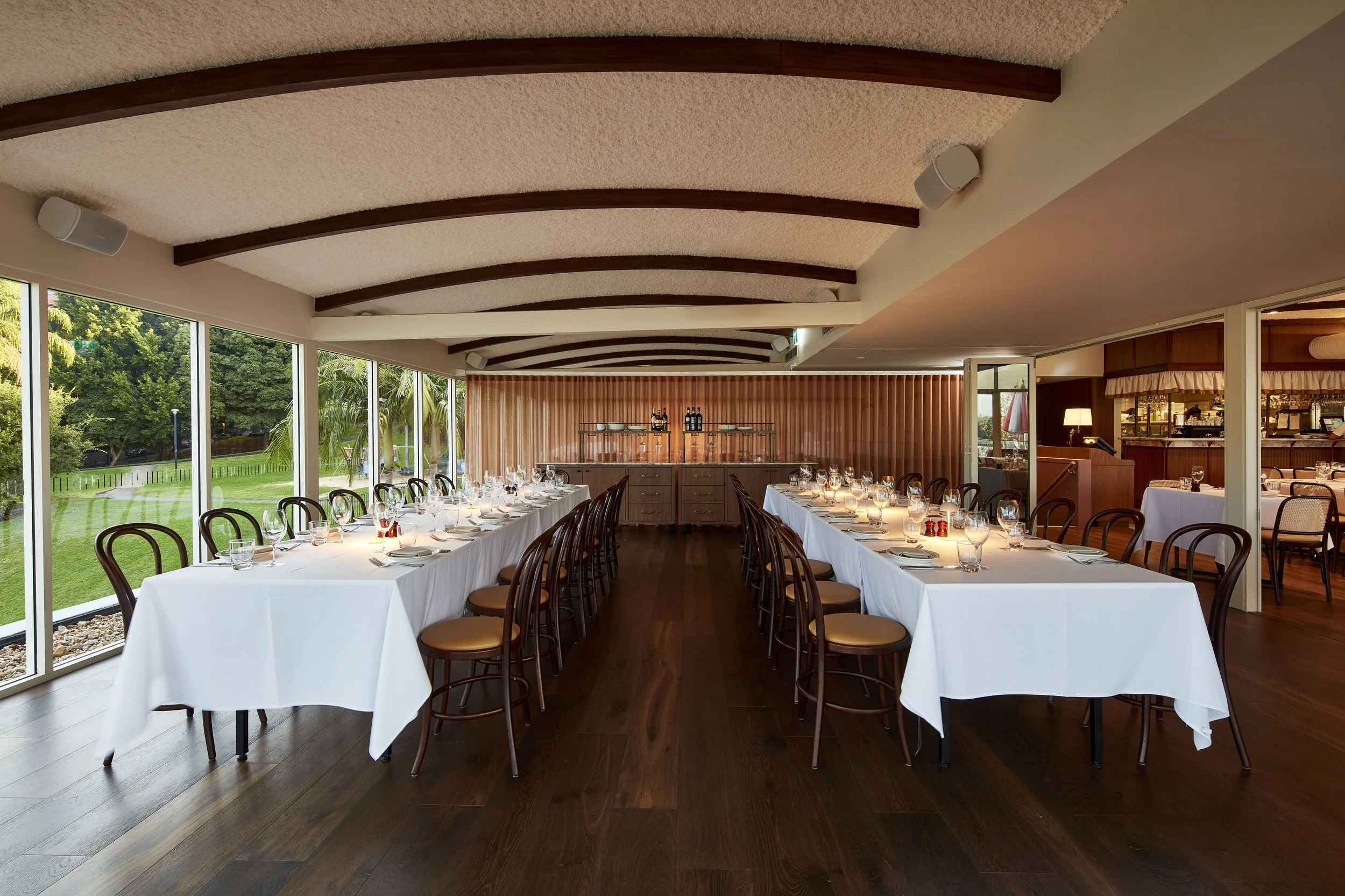
Three environmental factors create the 'special' feeling: acoustics, lighting, and spatial proportions. These are the elements you should evaluate when choosing a venue, not the generic ambiance factors most venues promote.
Acoustic privacy: the sound layer most venues ignore
True privacy requires acoustic separation, not just visual separation. Your guests need to feel they can't be overheard, and they need to not hear other diners.
The problem: thin walls, doors that don't seal properly, or rooms positioned near kitchen noise destroy the intimacy illusion immediately. You can have perfect lighting and beautiful furniture, but if your guests hear specific conversations from the main dining room, the space doesn't feel private.
Here's your practical test: stand in the private room and listen. Can you hear distinct words from outside? Can you identify what the kitchen staff are saying? If yes, the acoustic separation isn't sufficient.
Some venues use subtle background sound—not music, but carefully designed ambient noise—to create acoustic comfort without making the isolation feel oppressive. This works when done properly. Most venues don't do it properly.
Lighting temperature and the illusion of time suspension
Warm lighting creates a sense of timelessness. Cool lighting makes people aware of time passing.
The specific range matters: 2700-3000K produces the warm glow that makes an evening feel suspended from normal time. Anything cooler than 3500K starts feeling clinical. Anything approaching fluorescent temperature kills the special feeling instantly.
Dimmable lighting matters because the atmosphere needs to shift as the evening progresses. What works at 7pm feels too bright at 10pm. The ability to adjust brightness maintains the intimate atmosphere without anyone consciously noticing the change.
Your checkpoint: if you can clearly see every detail of the ceiling, the lighting is wrong. Private dining spaces should have pools of light—on the table, on faces—with the periphery gently fading into shadow.
Spatial proportions: why some private rooms feel like closets and others feel like sanctuaries
Rooms need roughly 2-3 square metres per person to feel comfortable rather than cramped. This isn't about luxury. It's about basic human spatial requirements.
Ceiling height matters more than most people realize. Low ceilings create oppression—guests feel physically compressed. Very high ceilings can feel impersonal, like you're dining in a warehouse. The ideal range is 2.7-3.5 metres. Enough height to feel expansive without losing intimacy.
Many venues convert storage rooms or unused office spaces into 'private dining rooms' without considering proportions. The result: spaces that technically fit the required number of chairs but feel fundamentally wrong.
Your practical guideline: if guests need to turn sideways to move around the table, the room is too small. If servers can't approach the table from multiple angles without disrupting other guests, the room is too small. Don't accept a venue's assurance that the space 'works fine' for your group size. Trust your physical experience of the space.
The Service Choreography That Makes or Breaks Private Dining
Private dining requires more attentive service but less visible presence. That's the paradox venues struggle with.
Poor service timing destroys the intimacy the space creates. Interruptions at wrong moments break the spell. A server entering mid-story to ask if anyone needs more water isn't being attentive—they're being intrusive.
When evaluating venues, observe how staff interact with private dining guests. Watch the timing of their approaches. Notice whether they pause before entering or just walk in. These details reveal whether the venue understands private dining or just offers separate rooms.
Anticipatory service versus intrusive service in enclosed settings
Anticipatory service means staff who read the room's rhythm and appear exactly when needed without being summoned. They notice when glasses are nearly empty. They sense when a course has been finished. They understand when conversation has reached a natural pause.
Intrusive service is checking in too frequently, interrupting conversations, or hovering near the door. In a private room, there's no crowd to blend into. Every entrance is noticeable. Every interruption is felt.
Your quality indicator: excellent venues train staff to pause and listen before entering private rooms. They don't knock and immediately open the door. They wait for acknowledgment. This small detail signals whether the venue understands the psychology of private space.
Why private spaces demand different timing protocols
Private dining should follow the guests' pace, not the kitchen's schedule. Courses should arrive when the room is ready, not when the kitchen is ready.
The common failure: venues that rush service to turn tables. But private dining rooms don't turn tables. That's the entire point. Rushing service destroys the time-suspension feeling that makes the experience special.
When booking, ask how the venue handles pacing in private rooms. Do they allow flexibility? Can the assigned server adjust timing in real-time based on how the evening is progressing? If the answer involves rigid course timing or predetermined schedules, the venue doesn't understand private dining.
The best venues assign a dedicated server to private rooms who has authority to adjust pacing without checking with management. This autonomy is crucial. It's the difference between service that responds to your evening and service that imposes a schedule on your evening.
The staff visibility paradox: present but not present
Staff should be immediately available but not constantly visible. Guests shouldn't feel watched.
Practical solutions include discreet call buttons, staff stationed nearby but outside the room, or pre-arranged check-in times that guests agree to in advance. What doesn't work: staff who disappear entirely (guests feel abandoned) or staff who linger in the room (guests feel monitored).
Your test question for venues: 'How do guests signal when they need something without leaving the room?' The answer reveals their system. No system means inconsistent service. An overly complicated system means intrusive service. A simple, intuitive system means they've thought this through.
Creating Moments Worth Remembering, Not Just Photographing
The most special private dining experiences create genuine connection, not just settings worth photographing.
All the elements—space psychology, environmental design, service choreography—work together to create meaning, not just exclusivity. A private room with poor acoustics and intrusive service isn't special. It's just expensive and separate.
When planning your next private event, prioritize venues that understand these principles over venues that simply offer a separate room. Ask about acoustic separation. Test the lighting. Observe the service culture. Question the pacing flexibility.
The 'special' feeling comes from guests forgetting they're in a restaurant and remembering they're in a moment together. That forgetting requires everything else to work correctly—the space, the sound, the light, the service, the timing. When it does work, you create the kind of evening people mention months later. When it doesn't, you've just spent more money on dinner.
You now have the specific criteria to evaluate venues properly. Use them.